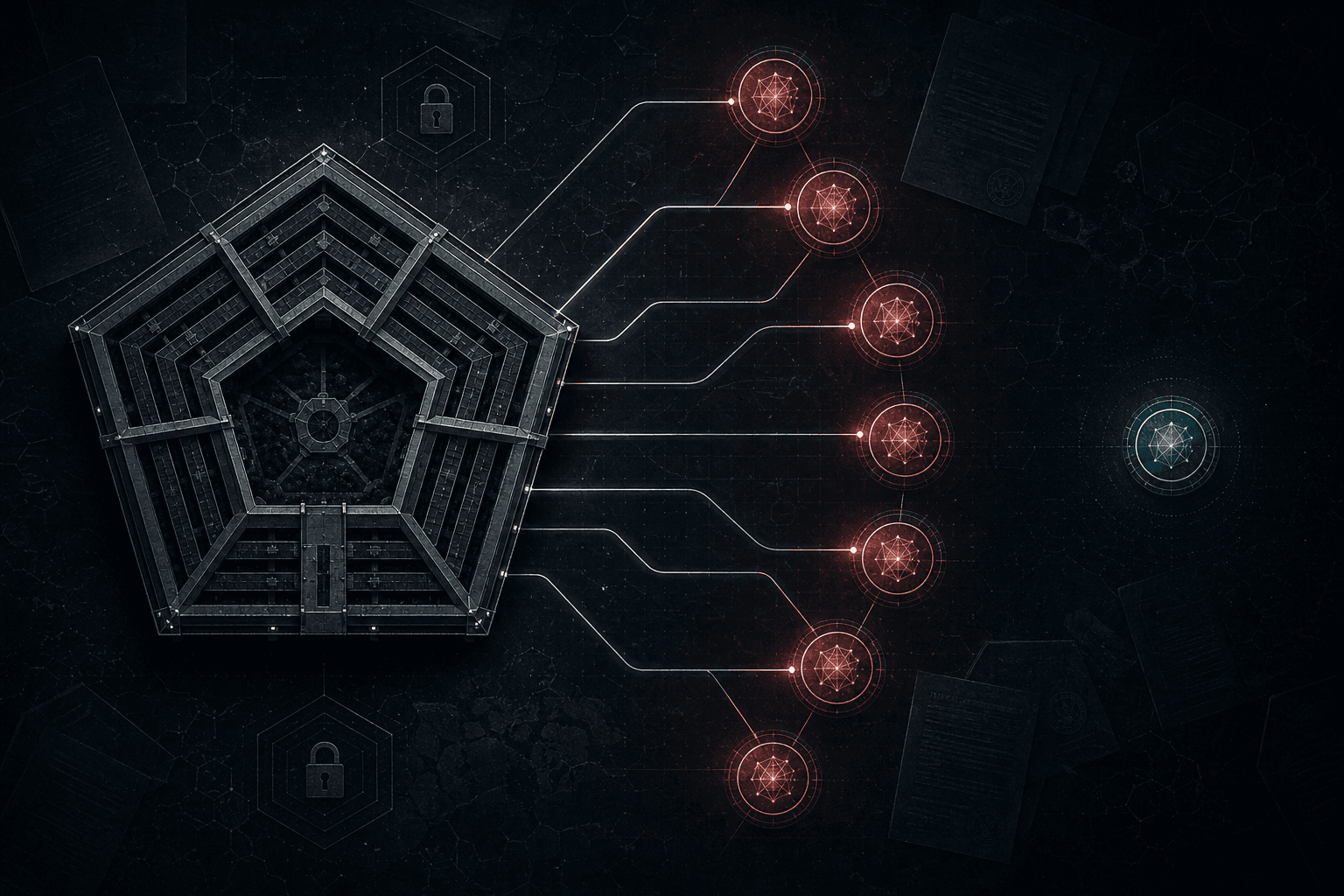

NVIDIA signs LOI to invest up to $100B in OpenAI for 10 GW of compute
On September 22, 2025, NVIDIA and OpenAI announced a letter of intent for a strategic partnership under which NVIDIA intends to invest up to $100 billion in OpenAI as the lab deploys at least 10 gigawatts of NVIDIA systems for next-generation AI infrastructure, according to the two companies' official press releases and reporting by Reuters and CNBC. The first gigawatt of capacity is targeted for the second half of 2026 on NVIDIA's Vera Rubin platform.
The agreement cements a relationship that began in 2016, when NVIDIA delivered the first DGX supercomputer to OpenAI, and that has since underwritten every major OpenAI training run from GPT-2 through GPT-5. It runs alongside, rather than replaces, the Stargate buildout backed by Oracle and SoftBank that the U.S. administration profiled in early 2025; OpenAI described the NVIDIA partnership as "complementing" Stargate, per Reuters and the Guardian.
NVIDIA chief executive Jensen Huang said in the joint statement that "NVIDIA and OpenAI have pushed each other for a decade, from the first DGX supercomputer to the breakthrough of ChatGPT. This investment and infrastructure partnership mark the next leap forward — deploying 10 gigawatts to power the next era of intelligence." OpenAI chief executive Sam Altman added: "Everything starts with compute. Compute infrastructure will be the basis for the economy of the future, and we will utilize what we're building with NVIDIA to both create new AI breakthroughs and empower people and businesses with them at scale."
Concretely, the agreement covers about 10 GW of NVIDIA systems, an order of magnitude above the typical hyperscaler training cluster of 2024 vintage, with the $100 billion released progressively as each gigawatt comes online, according to Reuters and the NVIDIA newsroom. Reuters noted that the structure makes NVIDIA both a major supplier and a significant equity holder in its largest customer; the Guardian estimated the implied per-gigawatt capital intensity at roughly $10 billion when factoring in power, real estate, and supporting hardware.

Industry reaction tracked NVIDIA's intraday move of about 4% on September 22 and a separate uptick in OpenAI's secondary-market valuation discussions, per CNBC. Antitrust commentators raised concerns about vendor concentration, while Bloomberg and the Financial Times observed that the deal further cements NVIDIA's position at the center of the U.S. AI infrastructure stack alongside its existing investments in CoreWeave and Lambda. By March 2026, NVIDIA had reportedly disbursed roughly $30 billion of the committed sum, with Huang publicly noting that the full $100 billion may not ultimately be invested if conditions shift.
For us at Enpo Sekai, the announcement is a reminder that the foundation-model layer is now a capital-intensity business in which our peers cannot meaningfully compete. We will not train frontier models in 2026 or 2027. Our work — characters, voice, persona, local-first desktop tools, and B2B character-engine licensing — sits on top of whichever foundation models survive this cycle, and our planning assumes that compute pricing for studios above the model layer will remain volatile while these gigawatt-scale buildouts come online.
We will be watching three things over the next twelve months: (1) the actual disbursement schedule against the $100 billion headline, since several similar AI infrastructure announcements in 2024-2025 have shrunk in execution; (2) whether OpenAI's compute commitments translate into more affordable inference pricing for downstream developers, or simply absorb the new capacity internally; (3) how Vera Rubin-class hardware reshapes the price-performance frontier for the inference workloads our character pipelines actually run on.