
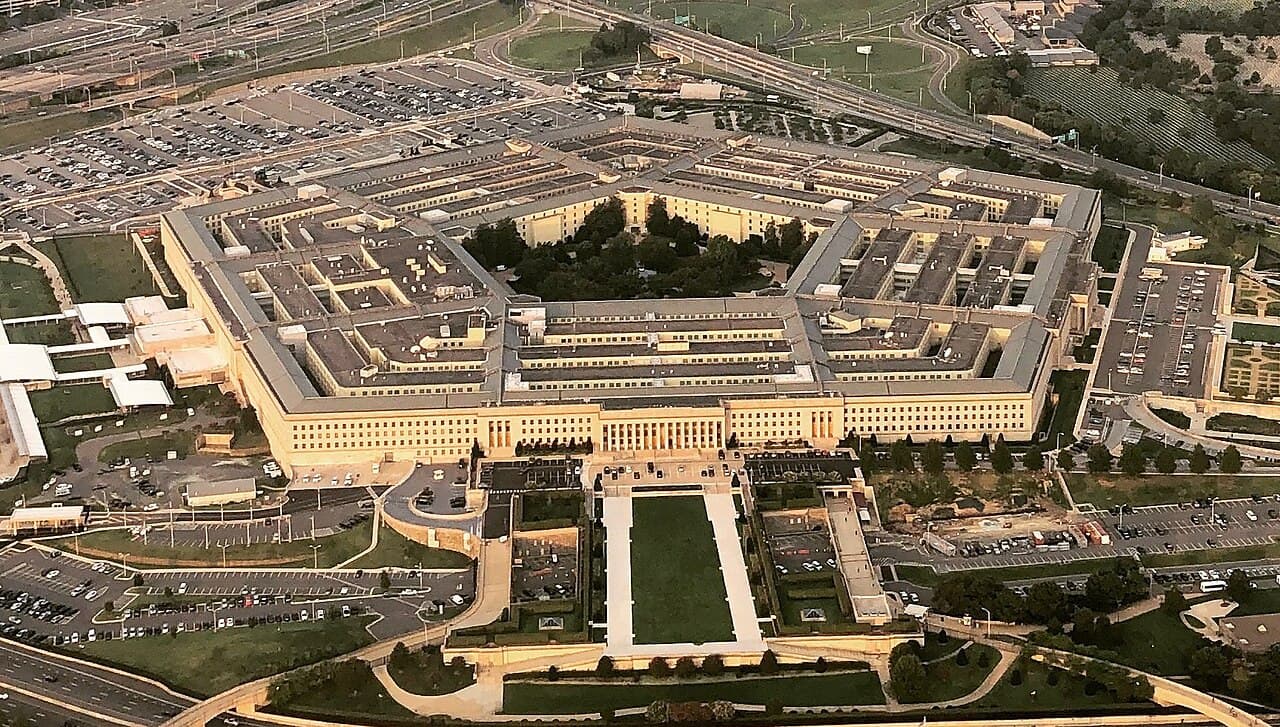
Pentagon awards classified-network AI contracts to seven vendors, excludes Anthropic over usage-policy stand-off
On May 1, the U.S. Department of Defense announced that it has signed agreements with seven AI vendors — OpenAI, Google, NVIDIA, Microsoft, Amazon Web Services, SpaceX and Reflection — to deploy their models on classified networks under the Pentagon's GenAI.mil platform, according to The Guardian, CNN, Reuters and Al Jazeera. Notably absent from the list is Anthropic, which the Pentagon has continued to designate as a "supply chain risk" since March 2026 over its refusal to remove usage-policy clauses prohibiting mass domestic surveillance and fully autonomous weapons.
The new agreements run through the DoD's Chief Digital and AI Office (CDAO) and its Frontier AI Office, an organisational pairing the Pentagon set up to centralise AI procurement under a single doctrine of avoiding "vendor lock" by spreading prototype contracts across multiple frontier providers. The original July 2025 round had awarded $200 million Other Transaction prototype ceilings to four vendors — including Anthropic — under similar structure, according to Lawfare's tracking. The May 1 round expands the pool and re-anchors procurement on the GenAI.mil classified platform, which the Pentagon first launched in December 2025.
Anthropic's position has been on the record since CEO Dario Amodei's late-2025 statement on the company's discussions with what is now branded the Department of War. In that statement, Amodei said the company supports "lawful foreign intelligence and counterintelligence missions" but considers mass domestic surveillance "incompatible with democratic values," and that Anthropic cannot "in good conscience" accede to requests to remove its safety guardrails. Anthropic has since filed a lawsuit challenging the supply-chain-risk designation, according to CNBC. The Pentagon has not directly quoted CDAO or Frontier AI Office leadership in the May 1 release; The Guardian and Reuters paraphrase the official framing as "diversification" and "broadening the AI provider base."
The Pentagon did not publish per-vendor ceilings for the May 1 awards; the precedent set by the July 2025 awards puts the OT ceiling at $200 million per vendor over two years, according to Ethixbase360 and Lawfare. Cumulatively, the seven-vendor structure implies a top-line addressable pool on the order of $1.4 billion in prototype OT capacity before any production-phase follow-ons. Lawfare's tracking notes that the Pentagon has separately requested $54 billion in autonomous-weapons funding in the FY2026 budget submission, of which AI software is a non-trivial slice. By comparison, the U.K.'s Defence AI Centre and France's Agence de l'innovation de defense run programmes an order of magnitude smaller.
Reaction in the AI industry was layered. Tech-policy commentators at Lawfare and Tech Policy Press read the structure as a deliberate test of whether procurement can substitute for governance — that is, whether the Pentagon can shape vendor behaviour by writing usage clauses into contracts rather than by waiting for federal AI legislation. Defence-industry analysts at Breaking Defense interpreted the broader vendor pool as institutional protection against any single provider — Anthropic's case being instructive — winning leverage over classified deployments. On the open-source side, the absence of Mistral and Cohere from the list raised questions about whether non-U.S. providers will ever be considered for classified work.