1X Technologies opens consumer pre-orders for NEO humanoid robot at $20,000
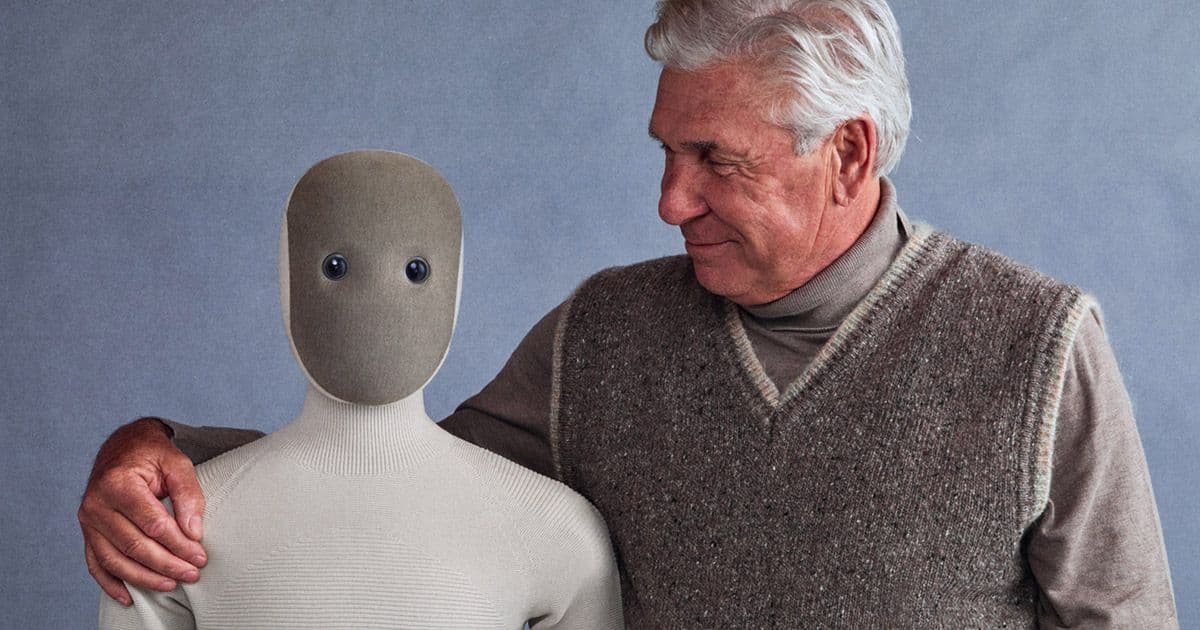
On October 28, the Norwegian-founded humanoid-robotics company 1X Technologies opened consumer pre-orders for NEO, a 5-foot-6, 66-pound household robot priced at $20,000 outright with first US deliveries scheduled for 2026, according to the company's launch release distributed via Business Wire and reporting by The Verge, TechCrunch, and Bloomberg. A monthly subscription option is also offered, and pre-orders require a $200 fully refundable deposit.
1X, formerly known as Halodi Robotics, is one of the most capitalized non-Tesla entrants in the humanoid space. Its 2023 Series A was led by the OpenAI Startup Fund with participation from Tiger Global; its January 2024 $100 million Series B was led by EQT Ventures with Samsung NEXT joining alongside continued OpenAI participation. NEO is the first 1X product targeted at consumers rather than enterprise pilots; the predecessor EVE platform was deployed primarily in security and industrial settings.
In the company's launch release and accompanying video, 1X chief executive and founder Bernt Børnich said: "Humanoids were long a thing of sci-fi, then they were a thing of research, but today, with the launch of NEO, humanoid robots become a product. Something that you and I can reach out and touch." The launch material also discloses that NEO supports remote teleoperation by 1X-employed "1X Experts" via VR for tasks the on-board model cannot complete.
The robot stands 1.68 meters tall, weighs roughly 30 kilograms (66 pounds), and uses a soft-body, tendon-driven design with 22 degrees of freedom in each hand, according to the launch spec sheet. On-device autonomy is provided by Redwood AI; the company's separately published 1X World Model — a 14-billion-parameter generative video model trained on roughly 900 hours of egocentric human video and 70 hours of robot data — is used internally as a learned simulator for evaluating policies. The $20,000 outright price sits alongside Figure's previously floated consumer range (above $30,000, with no consumer SKU shipped) and Tesla's stated $20,000-$30,000 long-term target for Optimus.
Industry reaction split between two camps. Roboticists interviewed by The Verge and IEEE Spectrum questioned the practical balance of on-device autonomy versus teleoperation in the launch demonstrations, with several arguing that NEO's general-purpose home tasks would still require remote human intervention well into 2026. Investors and analysts at Bloomberg and Sifted, on the other hand, framed the launch as the first calendar-credible US-shippable consumer humanoid SKU, ahead of Figure, Apptronik, and Tesla on the schedule even if not necessarily on the capability claims.
For us at Enpo Sekai, NEO is interesting as an adjacent rather than parallel product line. Our work is in characters, voice, and persona for desktop and games — the bits, not the atoms. But the question NEO forces — what kind of relationship does a household actually want with an autonomous agent it cannot fully predict — is the same question we work on, in a much smaller and lower-stakes form, every time we ship a desktop tool with a persona. We will not be entering humanoid robotics, but we will be reading 1X's user-research disclosures carefully.