
Sakana AI partners with Google, sets finance and government as core targets
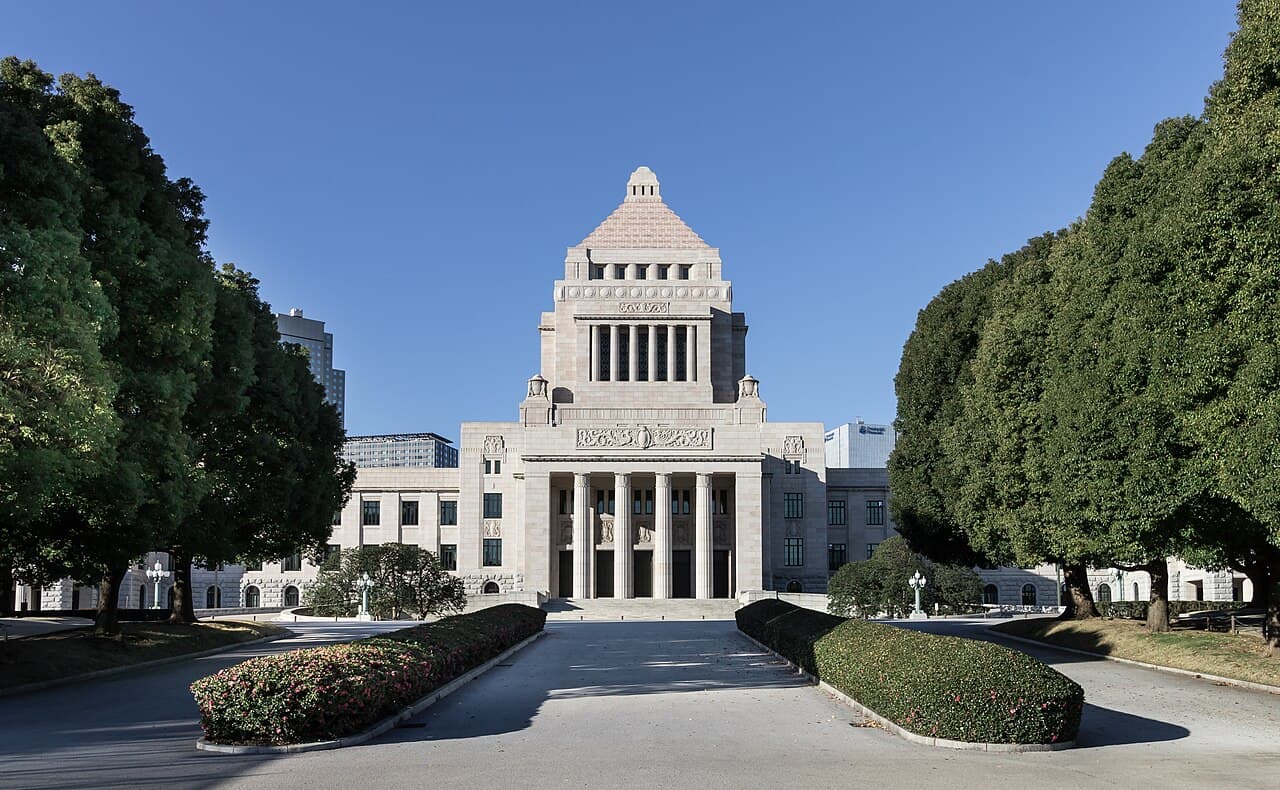
Tokyo-based Sakana AI on January 23 announced a strategic partnership with Google, including an undisclosed financial investment, as reported by Bloomberg, Nikkei Asia, MLex and BiggoFinance. Under the partnership, Sakana will use Google's Gemini and Gemma model families and Google Cloud infrastructure to build products targeted at financial institutions and government agencies in Japan. The deal was framed by both companies as a vehicle for accelerating the adoption of "reliable AI" in regulated, mission-critical Japanese sectors.
Sakana AI was founded in 2023 in Tokyo by former Google Brain researchers David Ha (chief executive), Llion Jones (chief technology officer, also a co-author of the original Transformer paper) and former METI official Ren Ito. In November 2025, the company closed a 135 million US dollar Series B at a 2.65 billion US dollar post-money valuation, with participation including Mitsubishi UFJ Financial Group, Khosla Ventures, Macquarie Capital, NEA, Lux Capital, In-Q-Tel, Salesforce Ventures and Mitsubishi Electric. The Series B announcement on November 17, as reported by TechCrunch and the company's own Series B note, already flagged finance, manufacturing, government, and defense and intelligence as the company's expansion targets for 2026.
Sakana AI did not publish a quotable executive statement at the level of a wire-press direct quote in the January 23 announcement; coverage by MLex and Bloomberg attributes positioning to the company as a corporate source. Bloomberg reports that the partnership is the latest step in Google's effort to keep Japanese enterprises and the public sector inside the Gemini ecosystem rather than drifting toward OpenAI or Anthropic. CEO David Ha, in his existing public statements collected by TechCrunch and the company's "Announcing Our Series B" page, has consistently framed Sakana's identity around evolutionary methods, model merging, and Japan-domestic AI sovereignty rather than scale-only foundation-model competition.
On numbers, the Series B amounts to roughly 32 billion yen at a 2.65 billion US dollar valuation, almost three times the 1.5 billion US dollar valuation Sakana reportedly held after its 2024 round. Annualised revenue and customer counts were not disclosed at the January announcement. Existing publicly disclosed work includes a partnership with Mitsubishi UFJ Financial Group on financial-services applications. Mitsubishi Electric's separately disclosed direct investment, and a multi-year research contract with the Ministry of Defense's Acquisition, Technology and Logistics Agency through its Defense Innovation Science and Technology Institute, were not yet publicly announced at the time of the Google partnership but were widely expected by analysts.
Industry reaction read the Google deal as a structural commitment rather than a one-off. Nikkei Asia, MLex and Tech in Asia all noted that a Google investment alongside In-Q-Tel — a US Central Intelligence Agency-affiliated investor on the Series B cap table — places Sakana AI on a sensitive but commercially valuable axis between Japanese sovereign customers and US-aligned strategic infrastructure. Domestic competitors, particularly Preferred Networks and ELYZA, face a starker positioning question as a result. Some governance analysts also flagged potential friction in Sakana's cap table as it expands across financial, government, and defense customers simultaneously.
For us at Enpo Sekai, Sakana AI's positioning at finance, government and defense is the right Japanese "moat" play — vertical-domain enterprise contracts where regulatory familiarity and domestic credentials are the key barriers. Our work sits one layer up, on consumer character, voice and persona products with a global addressable audience, so we do not directly compete. What we benefit from indirectly is Sakana's research line: model merging and evolutionary methods that may filter into the available Japanese-language base models we and other studios rent rather than train. We treat Sakana as a future supplier and reference, not a peer.
We will be watching three things over the next twelve months. (1) How much of the Google partnership is genuine technical co-development of Japanese-tuned Gemini variants versus a distribution and reseller arrangement on Google Cloud. (2) Whether Sakana's evolutionary and model-merging research lines actually produce competitive open weights or open recipes that non-Sakana customers can use, or remain captive to enterprise contracts. (3) Whether the simultaneous combination of In-Q-Tel, Google, MUFG and the Ministry of Defense on the same cap table generates governance friction or, conversely, locks in unprecedented sovereign-Japan AI access.