OpenAI signs deal with US Department of War to deploy AI on classified networks
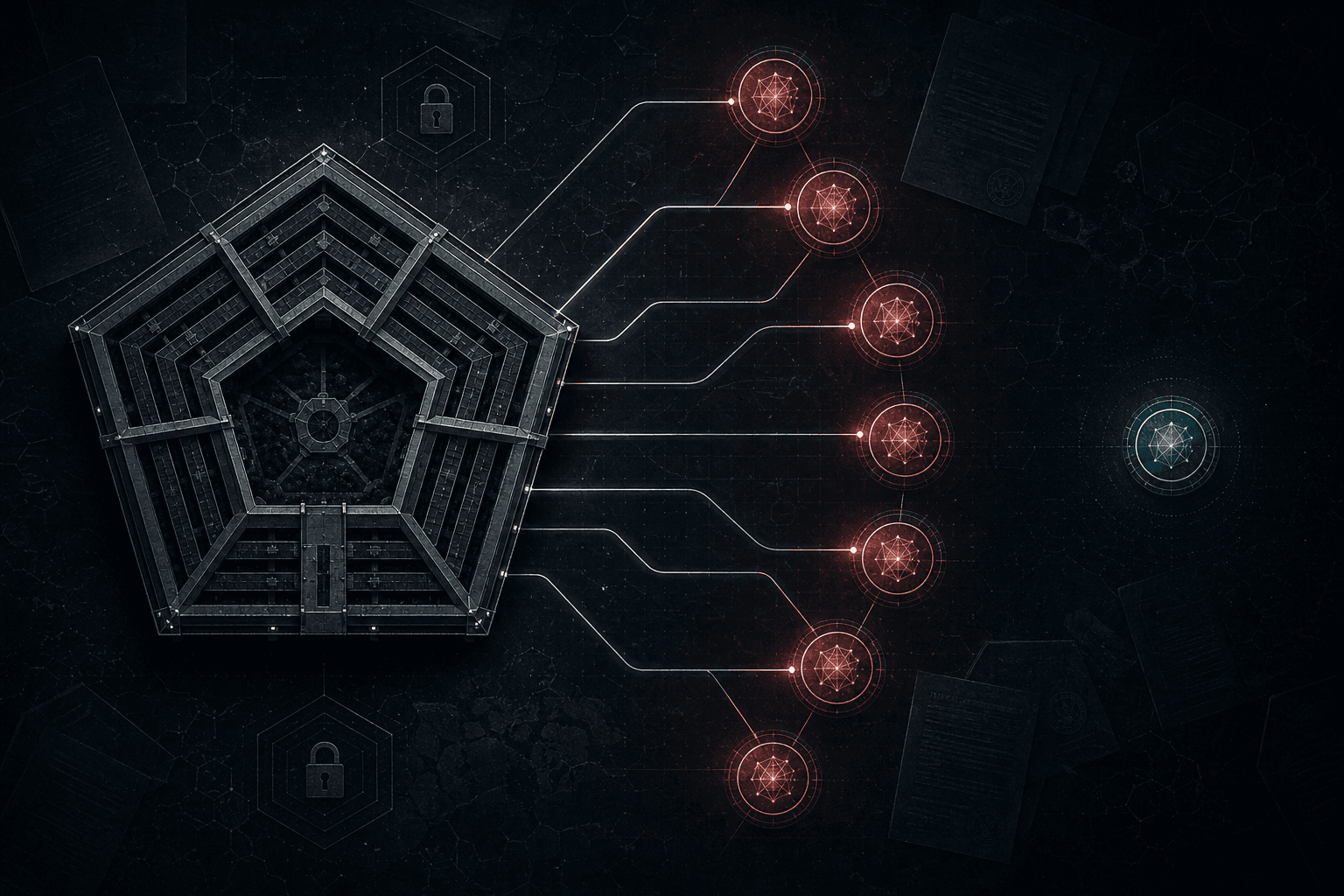
OpenAI on the evening of February 27 announced an agreement with the US Department of War — the renamed Department of Defense — to deploy its frontier models inside classified network environments at the IL5 and IL6 impact levels. The announcement was reported by Reuters, The Guardian, The Intercept, Tech Policy Press and Axios. OpenAI published a companion blog post titled "Our agreement with the Department of War" the same evening, framing the contract around three explicit "red lines" against mass domestic surveillance, the direction of autonomous weapons, and high-stakes automated decision-making.
The deal lands at the end of a roughly two-month sequence in which the Pentagon's parallel negotiations with Anthropic collapsed over similar contractual language, with Anthropic publicly designated by the Department of War as a "supply chain risk" — a designation reported by Tech Policy Press, The Intercept and Defense Scoop in February. OpenAI's prior contracting with the US Defense Department had run through the Chief Digital and Artificial Intelligence Office, including a 200 million US dollar June 2024 contract that was the company's first significant defense engagement. The new agreement materially deepens that posture by extending into classified networks rather than only unclassified workflows.
In a post on X timestamped the same evening, OpenAI chief executive Sam Altman wrote: "Tonight, we reached an agreement with the Department of War to deploy our models in their classified network. In all of our interactions, the DoW displayed a deep respect for safety and a desire to partner to achieve the best possible outcome." OpenAI's accompanying blog post added that the company retains "full discretion" over its safety stack, that no model will be deployed without safety guardrails, and that intelligence-agency use, including by the National Security Agency, "would require a new, separate agreement." The contract value was not disclosed in either the OpenAI post or the Department of War's release.
On scope, the agreement covers IL5 and IL6 environments — Department of Defense impact levels for controlled unclassified information and Secret-level classified information respectively — with deployment as cloud-only, not on edge devices. The Pentagon's broader May 1, 2026 announcement subsequently expanded the same model into IL6 and IL7 environments alongside seven other firms — Google, NVIDIA, Microsoft, Amazon Web Services, Oracle, SpaceX and Reflection — explicitly excluding Anthropic. OpenAI's contracting with the Department of War sits inside a much larger, still-unfolding 2026 procurement cycle that Defense Scoop and Breaking Defense have tracked through the spring.

Industry reaction was immediate and split. Defense-aligned commentators welcomed a US frontier-AI lab finally working inside classified networks at scale. Critics, including The Intercept and several civil-society groups cited by Tech Policy Press, argued that the red lines are not enforceable in public because the contract itself was not released. The Guardian on March 4 reported Altman's separate acknowledgement that OpenAI cannot ultimately control how the Pentagon operationally uses its products. Reuters on March 3 reported a contract amendment to clarify that intelligence-agency use is excluded without a follow-on agreement. Anthropic's exclusion from the May 1 broader deal underscored the cost of the company's stricter contractual posture.
For us at Enpo Sekai, our products sit far from this category — consumer character, voice and persona experiences in entertainment and global media, not national-security infrastructure. But this contract sets a precedent that does affect us indirectly. As frontier AI labs increasingly take on sovereign national-security customers under classified terms, downstream API risk for indie developers like us — usage-policy revisions, regional access constraints, audit obligations — quietly increases. Our response is not to take a public position on this deal; it is operational. We continue to keep our pipeline cloud-portable, with no single-vendor lock-in for character and voice models, and we maintain a fallback path to local-first inference for the consumer-facing layer.
We will be watching three things over the next twelve months. (1) Whether Sam Altman's stated red lines on mass surveillance and autonomous weapons survive subsequent contract amendments — Reuters has already reported one amendment in March 2026, and the underlying contract text remains undisclosed. (2) Whether other sovereigns — particularly the United Kingdom, Japan, France and Israel — sign comparable classified-network agreements with OpenAI, Anthropic or Google, and whether the precedent set in Washington travels. (3) Whether the precedent triggers an internal-talent response inside OpenAI similar to the 2024 wave of safety-team departures, since classified-network deployment is the type of step that has historically split frontier-lab cultures.